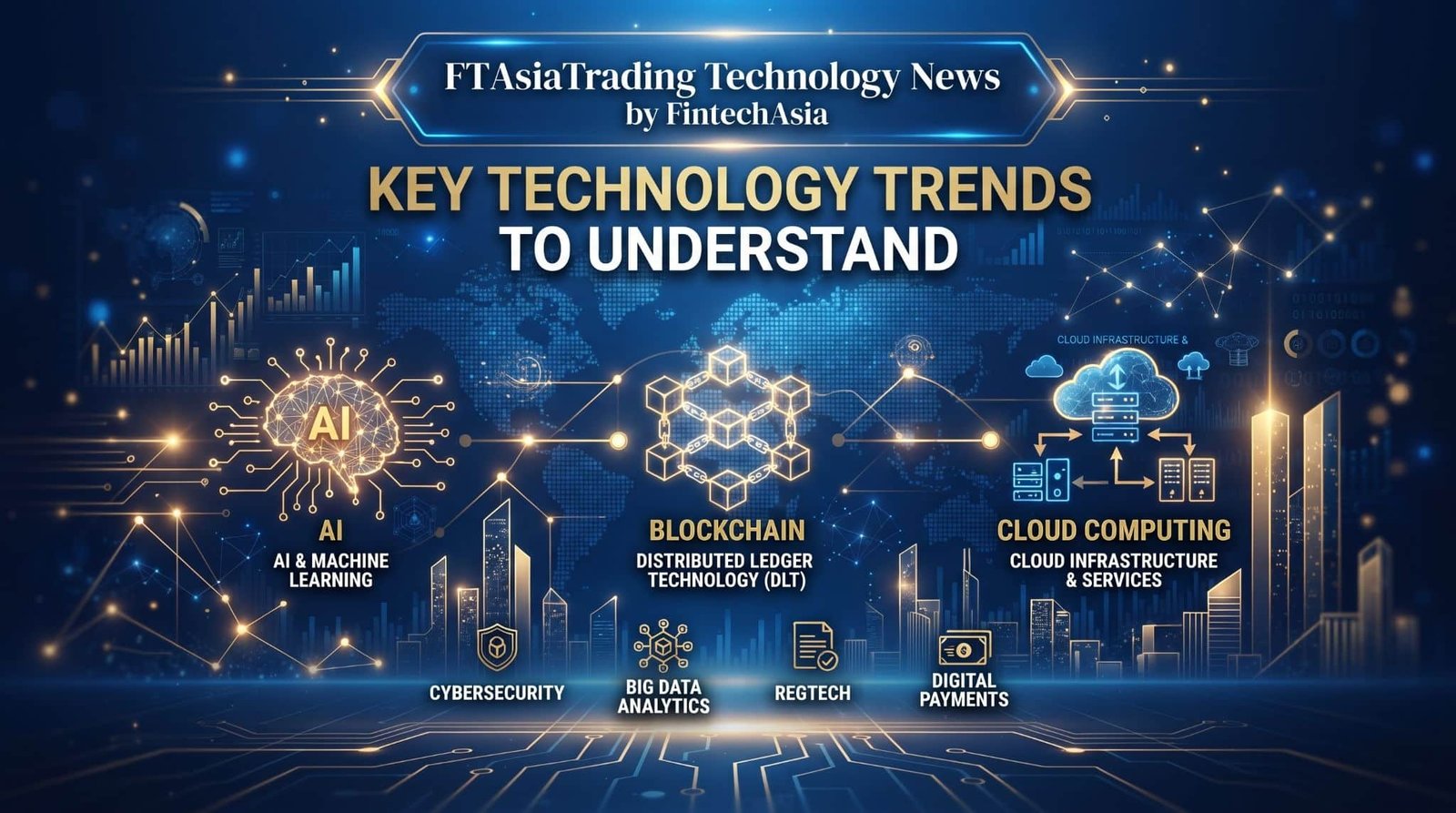
FTAsiaTrading Technology News by FintechAsia: Important Technological Developments to Recognize
The financial sector is relying more and more on technology. Trading platforms, banks, payment businesses, investment firms, and fintech startups use software to process information, communicate with customers, manage transactions, and protect financial data.
This shifting environment helps explain the growing interest in FTAsiaTrading technology news from FintechAsia and related searches about trading technology.
It is helpful to comprehend the broader technology influencing digital finance rather than concentrating just on specific platforms.
1. The use of artificial intelligence
One of the most significant advancements in fintech is artificial intelligence.
AI is capable of automating some analytical activities and processing massive information. Financial institutions may use machine learning for a variety of purposes, including risk assessment, document analysis, fraud detection, and customer support.
Traders can use algorithms to identify trends and organize market data.
However, users should not confuse AI with guaranteed prediction. A model trained using historical data can produce incorrect results when market conditions change.
Therefore, users should evaluate AI systems based on their specific purpose, data quality, methodology, and limitations.
2. Automated Trading Systems
Automation lets software follow preset instructions, therefore removing the requirement for human involvement.
An automatic method could respond to particular pricing levels, market conditions, or other factors.
Though automation can bring fresh risks, it can also raise consistency and speed. A programming bug, wrong setup, poor data quality, or an unanticipated market event might affect an automated system.
This is why testing and monitoring are important.
3. Cloud Computing
Cloud computing has become an important component of modern software infrastructure.
Instead of operating every computing resource on local hardware, organizations can use cloud infrastructure to store data and run applications.
For financial technology companies, cloud systems can support scalability, software development, analytics, and distributed applications.
Security and regulatory requirements remain important considerations, particularly when organizations store or process financial or personal data through cloud services.
4. Application Programming Interfaces
APIs allow different applications to exchange information.
An API in financial technology can link a trading application to analytics software, account systems, market data services, and other platforms.
This enables the development of specialized tools based on the current financial infrastructure.
When working with financial APIs, developers should pay special attention to authentication, authorization, rate limitations, documentation, and error handling.
5. Cybersecurity
Security is an essential part of trading technology.
Financial accounts can contain sensitive information and may provide access to transactions or other valuable resources.
Common security measures include:
- Multi-factor authentication
- Strong passwords
- Secure session management
- Access controls
- API permission restrictions
- Encryption
- Login alerts
- Software updates
Users should also avoid installing unknown applications or entering account credentials through suspicious links.
6. Blockchain
Blockchain technology continues to attract attention from financial technology companies.
Its ability to maintain a shared transaction record has led to experimentation in areas such as digital assets, tokenization, payments, and settlement.
The technology itself does not determine whether a particular financial product is safe or appropriate. Each implementation has to be evaluated on its own technical and economic characteristics.
7. Digital Payments
Digital payments are another major part of fintech.
People and companies move money thanks in great part to mobile wallets, internet payment systems, QR-based payments, and digital banking apps.
As digital payments expand, identity verification, fraud prevention, privacy, and cybersecurity all become more critical.
8. Data Analytics
Financial organizations generate enormous quantities of data.
Analytics systems can organize this information and help businesses understand customer behavior, transaction patterns, operational performance, and market activity.
Good data analysis depends on reliable data. Poor-quality or incomplete data can produce misleading results regardless of how sophisticated the software is.
What Readers Should Look For in Technology News
When reading FTAsiaTrading technology news by FintechAsia or similar financial technology coverage, readers should ask several questions.
What technology is actually being discussed?
A headline may use terms such as AI or blockchain without explaining how the technology works.
Is there evidence?
Specific claims should ideally be supported by documentation, official announcements, technical information, or independent reporting.
Is the information current?
A technology product can change significantly after an article is published.
Who published the information?
The website, author, publishing date, and editorial context should all be examined by readers.
Financial Risk Is Not Eliminated by Technology
One widespread misconception is that improved technology inevitably makes trading safer or more lucrative.
That is not always the case.
Market volatility is not eliminated by quicker execution. Accurate forecasts are not guarantyd by AI analysis. Programming risk is not eliminated by automated trading. Not all digital assets are immediately made trustworthy by blockchain.
Although technology can enhance tools and procedures, users must still be aware of the hazards involved in financial transaction.
A Practical Way to Follow Fintech Technology News
Readers can make technology news more useful by following a simple process:
- Identify the technology being discussed.
- Find the original source.
- Check when the information was published.
- Look for technical details rather than marketing language.
- Compare important claims with independent sources.
- Avoid treating technology coverage as personal investment advice.
This approach can help readers separate useful information from exaggerated claims.
Conclusion
The FTAsiaTrading technology news from FintechAsia is a part of a broader conversation on the role of technology in modern finance. Artificial intelligence, automation, cloud computing, cybersecurity, blockchain, digital payments, APIs, and data analytics are all having an influence on the financial sector.
The story involves more than simply the technology. Understanding a system’s limitations, information sources, and operation is equally important.
The greatest technology coverage should make complicated changes easy to grasp for readers interested in fintech while clearly differentiating proven facts from projections and promotional claims.